


[Jump to the webinar recording]
The Results
- Websites delivered 2.5 weeks faster
- Time spent reconciling client feedback reduced by 88%
- 150+ five-star reviews maintained across platforms
- Lower employee turnover than industry average
- Faster path from website launch to ongoing SEO and AEO growth services
The Problem: Website Feedback Chaos
Longhouse Branding & Marketing is Canada's top marketing agency, but like most agencies, they didn't start that way.
In the early days of Longhouse, Founder & CEO, Keenan Beavis along with CTO, Austin Mallar, ran everything out of Facebook Messenger. Project updates, revision requests, client feedback: all of it lived in a chat thread. With two or three people and a handful of clients, it worked. Just about.
"What worked when we were a team of 2 or 3 stopped working as we grew," says Keenan. "When we hired our fourth and fifth person, and we were running two or three projects at a time, systems become mandatory, frameworks become necessary, and the tools you invest in become absolutely required."
The website feedback process was the sharpest pain point and became the catalyst for change.
"We had a client (they're still with us today) who wasn't very technical. The way they would leave feedback on a website was to take a screenshot of the webpage, print it out, mark it up with a pen, scan it, and send it back. We did probably 5 rounds of revisions that way. That was manageable for me personally, but I couldn't ask anyone on my team to do that,” describes Austin.
Revision cycles were getting longer, team members were getting frustrated, and Longhouse had ambitions to grow well beyond what an email-and-Messenger process could support.
The Introduction of BugHerd for Website Feedback
The key insight Keenan identified was what he calls the ‘negative feedback loop’. When clients have no comfortable channel to express feedback, they feel trapped, which creates distrust and results in painful revision cycles for all.
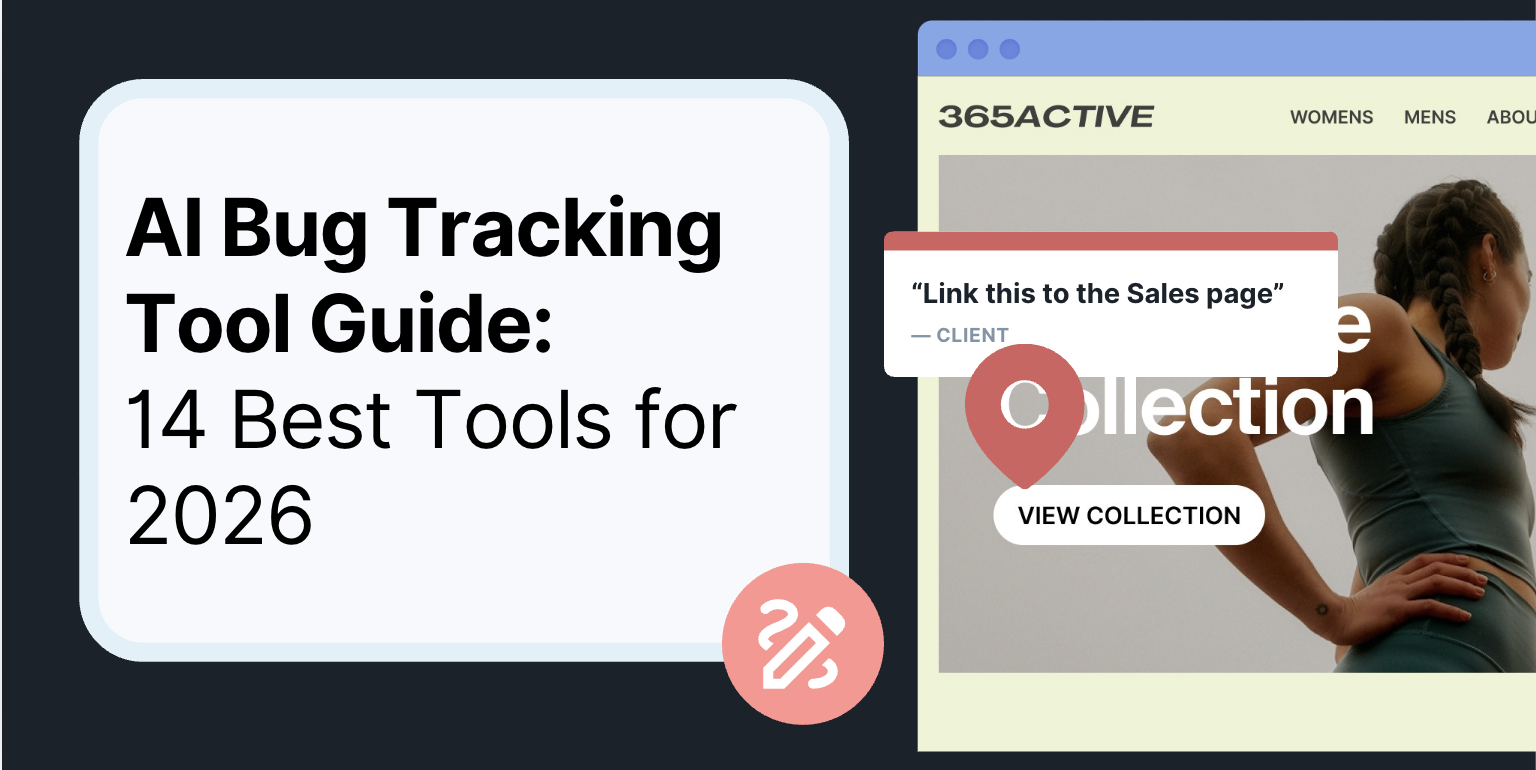
So Longhouse implemented BugHerd as the dedicated tool for all client feedback and website revisions. The choice was straightforward: clients needed a way to leave specific, visual feedback directly on a live website without requiring any technical knowledge. BugHerd's visual, pin-based interface delivered exactly that and was a frictionless tool for Longhouse’s clients.
When clients have a clear channel, they consolidate all their feedback in a single round rather than spreading it across emails, messages, and phone calls; and the website feedback stage of the project becomes a delight for them.
The agency’s goal is to use website projects as a growth tool for every client: Start off with a website, make it a great experience for the client, and then continue to help them grow with SEO, AEO, or ads. So making sure they have a smooth feedback experience is critical.
The Longhouse Workflow
1. The education deck
Before a project starts, Longhouse sends every new client an education deck: a presentation that walks through exactly what the experience of working with Longhouse will look like. It covers discovery, wireframing, content creation, design, and launch. Critically, it includes a short video demonstrating how to use BugHerd, showing examples of vague feedback ("can you make it pop?") versus specific, actionable feedback.
"We show clients what good feedback looks like before they ever use the tool," says Keenan. "That sets expectations and makes the revision round faster for everyone."
2. Two-phase website review
Longhouse presents website projects in two phases:
- First, they share the homepage build where clients review layout, colors, and typography. They use BugHerd to collect client feedback and based on that, they design the remaining key pages.
- Then a second BugHerd revision round covers those additional key pages. By the time the website is ready to launch, clients have had two structured, frictionless feedback rounds with no email threads, no printed screenshots, and no ambiguity.
BugHerd post production
After launch, BugHerd stays active. For web maintenance clients and for ongoing SEO and AEO content work, having BugHerd enabled permanently means clients can leave feedback on new pages and blog posts as they go live; extending the tool's value well beyond the initial build.
The Longhouse Tech Stack
Longhouse runs BugHerd alongside a number of other key tools:
The Impact Beyond Time Savings
The headline metrics - 2.5 weeks faster delivery, 88% reduction in time spent reconciling client feedback - are significant, but Keenan says the impact he's most proud of isn't in those numbers.
"The result I'm most proud of is how much happier our team is. Marketing agencies have notoriously high employee turnover. We don't have that problem at Longhouse. Stable teams produce better results because the same people carry a project from start to finish. BugHerd has contributed to that stability by removing one of the most frustrating parts of the job."
Lower employee turnover has a compounding effect on client outcomes: experienced team members who know a client's brand and history produce better work than teams rebuilt every six months.
Tangibly, Longhouse is now known as the fastest-growing agency in Canada and the highest-rated marketing agency in Vancouver, according to Clutch.
One way Keenan and the Longhouse team is using the time-savings of tools like BugHerd is to write thought leadership. They are now celebrating the upcoming launch of the first book ever written about AnswerMapping, an AEO (Answer Engine Optimization) framework that helps businesses “become the answer” on AI platforms such as ChatGPT, Gemini, Claude and Perplexity.
To read more about Longhouse and how their agency uses BugHerd, read our spotlight story here.
Three (3) Practical Tips for Agencies Still in the Chaos Era of Their Business
Longhouse offered three pieces of advice for agencies still dealing with messy, unstructured website revision processes:
- Invest in your infrastructure before you need it. The time to fix your processes and systems is before you're drowning in it; not after. Give your team the tools to be successful at every stage of growth.
- Replicate yourself. Train team members to own processes that currently depend on you. The agency can only grow at the rate you're willing to delegate.
- Protect time to build your own business. Longhouse generates 70% of its leads from Google search and AI platforms like ChatGPT. With 44% of company searches now happening within AI-enabled platforms, the time you save by fixing your internal processes should be reinvested into how your clients find you; whether that's SEO, AEO, or answer mapping frameworks.
Transform your Website Feedback Process
In the end, Longhouse’s story isn’t just about faster delivery or fewer revision headaches, it’s about building a scalable, repeatable process that supports both team happiness and client success. By turning chaotic feedback into a clear, structured system, they’ve unlocked better outcomes across the board: smoother web projects, stronger relationships, and more opportunities for growth beyond the website build.
If your team is still stuck juggling feedback across emails, spreadsheets, and screenshots, it might be time to rethink your process. BugHerd is the perfect website feedback tool for agencies, providing a simple way to centralize feedback, speed up revisions, and deliver better websites.
Ready to see BugHerd in action?
👉 Book a 1:1 demo to see how BugHerd fits into your workflow
👉 Or start your free 7-day trial and experience faster, clearer website feedback today
Wondering what BugHerd could save your agency?
Longhouse cut their feedback time by 88% and delivered projects 2.5 weeks faster. Use our ROI calculator to estimate the time and cost savings your team could see. Just enter your team size, hourly rate, and feedback timeframe. 👉 Calculate your ROI
Watch the Longhouse webinar here:
Frequently Asked Questions
How much faster can BugHerd help an agency deliver websites?
Longhouse, a full-service marketing agency based in Canada, reduced their website delivery time by 2.5 weeks after implementing BugHerd. They attribute this to consolidating client feedback into a single structured revision round rather than managing it across email threads, messages, and printed screenshots.
How do marketing agencies reduce website revision time?
The most effective approach for agencies to reduce their website revision time is giving clients a dedicated visual feedback tool so they can pin comments directly onto a live website rather than describing issues in emails or messages. Longhouse saved up to 6 hours per week managing website feedback by introducing BugHerd and pre-educating clients on how to leave specific, actionable feedback before the revision round begins.
Should I integrate BugHerd with my project management tool like monday.com, Jira, or Basecamp?
Most agencies find it more effective to keep BugHerd sandboxed for the revision phase rather than deeply integrating it with their main project management system. Website feedback comes in at high volume and can create noise in a main project backlog. Longhouse tried integrating BugHerd with monday.com but found it cleaner to manage revision tasks directly in BugHerd's built-in Kanban board, using Slack notifications to keep the team informed. Nevertheless, BugHerd does offer deep two-way integrations with tools such as Jira, Trello, Asana, ClickUp, etc, for agencies that prefer to integrate BugHerd into their existing workflows. See all BugHerd integrations.
How do agencies use BugHerd after a website launch?
BugHerd can stay active on production sites beyond the initial build. Longhouse leaves BugHerd enabled for web maintenance clients and for ongoing SEO and AEO content work, so clients can leave feedback on new service pages and blog posts as they go live. Find out more about BugHerd’s Ongoing Feedback Widget.
Is BugHerd easy for non-technical clients to use?
Yes BugHerd is incredibly easy for non-technical clients to use. They just click directly on any element of the live website to leave a pin with their feedback - no technical knowledge required. And clients are not required to log in or set up an account - they are sent a link and can start leaving feedback right away.
Longhouse reports that clients with no technical background adopt BugHerd with almost no resistance after a brief demo. They describe it as a frictionless experience that gets clients excited to engage with the revision process rather than dreading it. See BugHerd in action here.
How does a better revision process help an agency win more business?
A smooth revision experience is often the last interaction a client has with an agency during a project. Longhouse found that clients who have a positive, collaborative revision experience are more likely to sign on for follow-on services like SEO, AEO, and advertising, and more likely to recommend the agency and return for future projects. As Keenan Beavis puts it: "If the website feedback process is a delight, they’re more likely to recommend us to other people."
How does BugHerd affect agency employee retention?
Longhouse attributes part of their below-average employee turnover to BugHerd. Chasing vague client feedback across email threads and messages is one of the most frustrating parts of agency work. By giving the team a clear, structured revision tool, BugHerd removed a major source of daily friction. Stable, experienced teams produce better results and reduce the cost of rehiring and retraining.
About Longhouse
Location: Langley, British Columbia, Canada
Team size: 20+
Services: Website design, SEO, AEO, branding, paid advertising
Stack: WordPress, Elementor, monday.com, Slack, BugHerd, Adobe, Figma, Cloudways, ReLoom
Longhouse Branding & Marketing is one of Canada’s leading marketing agencies, known for helping businesses grow through high-performing websites, graphic design, SEO, AEO, social media and digital strategy. Founded by Keenan Beavis, the agency has built a strong reputation for delivering measurable results while maintaining exceptional client satisfaction, with over 150 five-star reviews across platforms. Their approach combines creative execution with scalable systems, allowing them to consistently deliver quality work as they grow.
What sets Longhouse apart is their focus on long-term client success. Rather than treating websites as one-off deliverables, they use them as a launchpad for ongoing services like SEO, AEO, and digital advertising. Backed by a streamlined tech stack and refined processes, Longhouse is able to deliver websites faster, create better client experiences, and support sustainable growth for both their clients and their team.

Marina Domoney
Marina Domoney is Marketing Communications Lead at BugHerd and a senior B2B marketer with 20+ years’ experience in SaaS and website delivery workflows. She’s worked closely with agencies, creative teams, and developers across countless web projects, giving her practical expertise in design and website feedback, approvals, and client collaboration.
Try BugHerd on your site
See feedback in context
Click anywhere to leave feedback directly on your website.







But don't just take our word for it.
BugHerd is loved by 10,000+ companies,
350,000+ users across 172 countries.
4.8/5
4.7/5
4.5/5
5/5
8.7/10
Sam Duncan 📱📏 🌱
@SamWPaquet
"@bugherd where have you been all my life??
We just migrated our bug tracking over from Asana and have at least halved our software testing time🪳👏📈. "
Ashley Groenveld
Project Manager
“I use BugHerd all day every day. It has sped up our implementation tenfold.”
Sasha Shevelev
Webcoda Co-founder
"Before Bugherd, clients would try to send screenshots with scribbles we couldn't decipher or dozens of emails with issues we were often unable to recreate."
Mark B
Developer
“A no-brainer purchase for any agency or development team.”
Kate L
Director of Operations
"Vital tool for our digital marketing agency.”
Paul Tegall
Delivery Manager
"Loving BugHerd! It's making collecting feedback from non-tech users so much easier."
Daniel Billingham
Senior Product Designer
“The ideal feedback and collaboration tool that supports the needs of clients, designers, project managers, and developers.”
Chris S
CEO & Creative Director
“Our clients LOVE it”
Emily VonSydow
Web Development Director
“BugHerd probably saves us
at least 3-4hrs per week.”